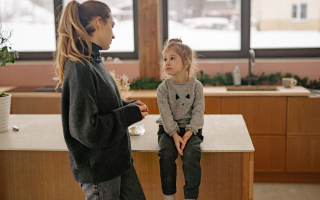
How to talk to your child about back-to-school worries

Going back to school can bring up worries for some children, particularly if they remember difficult experiences from the previous term, such as bullying, loneliness, self-esteem struggles or academic difficulties.
Talking through these with your children is really important to understand the core of the issue, and make a start on getting ahead of it before these same problems resurface.

They cannot control the past, that time has passed. That ship has sailed, as they say.
They cannot control what happens in the future, it hasn't happened yet and it concerns what other people do, say and feel so it is out of our control.
Yes, you're right. The only thing we can control is the present. Conversations can help children distinguish exactly that - understanding the difference between what has happened, what they're worried might happen, and what they can do now.
Think of the present as like a present, a gift. It is a chance to give ourselves all we need right now.
How to talk with your child about back-to-school worries
What you want to establish is asking them how they want to feel about going back to school. Every child is different, so the exact method of communication is going to vary by household - I've given you a few different communication styles to explore below, which you can choose based on your child's personality.
-
Ask what your child has learnt about themselves
To do this, you'll need to think back to what you've been up to, make a list or scroll through some photos on your phone to remind them. For each activity, ask what they learnt about themselves and write down the skill, quality or personality trait.
Maybe they improved their swimming, how did they do that? Did they demonstrate perseverance? Were they brave, did they listen well to instructions?
By the time you've been through the activities of their summer holidays, you should have a good list of skills they can apply to their return to school. So finish this activity by just asking them how these new skills will help them.
Try to give them space to find their own answers rather than offering suggestions straight away. Tempting as this may be, they will actually get the learning by doing it themselves and they know best what they need for the situations they are worried about.
2. Check in and listen to their worries
Find out on a scale of 0-10 how they feel about going back to school.
0 = very worried and 10 = really looking forward to it. If their score is below a 5, ask them what they are specifically worried about. Don't pressure them to talk about it straight away, but let them know you're available to listen when they're ready
Be sure to acknowledge what your child has said first. For example, “That sounds like it's been worrying you” before asking further questions. Once you've led with that, you can ask "That thing you're worried about, what makes you think that might happen?" This worry is real, but what they're worried about isn't necessarily going to happen, it is a belief because no one can predict the future. Just as they have changed over the summer holiday; gone up a shoe size, learnt to overcome a few challenges, gone up a level or few on their game or their hair's grown. Nothing stays the same. Instead of expecting what happened in the past, imagine instead an ideal start to the new term.
3. Imagine what a positive return could look like
Ask them to draw a picture of themselves at school, visualising a great day of all the things they like about school.
Use it to encourage conversation too: ask the child what they would like their first day to look or feel like, and what might help if something doesn't go to plan.
They could do this either with pen and paper, or on their computer, iPad or whatever tech they like to use. You can use AI to create some positive images to go with it too, or craft it into a story for them.
Maybe they'd like to do a vision board using a collage of images that show positive elements of the new term. The images don't need to show the school but maybe have colours or words that inspire them. You can then talk about the images/words the child chooses and why they matter to them. They can put that on the wall of their bedroom, as a reminder until school starts again.
4. Encourage age-appropriate independence
Depending on their age, your child might like to take on a little more responsibility. Introducing a new responsibility such as getting them to set their alarm for getting up in the morning, making their own breakfast, getting dressed themselves, packing their school bag, making their packed lunch, anything like that will mark out how they've developed over the summer holidays and make them feel more confident and self-assured.
This is likely to be especially effective for kids whose primary concern is their confidence - starting small and showing them that they are capable will help to slowly adjust their mindset and self-worth and believe (as I'm sure you do) how capable they are.
Back-to-school worries may not disappear straight away, but keeping communication open can help your child feel heard and supported. Try to give them space to share what’s on their mind without rushing to solve the problem. Listening, acknowledging how they feel and exploring possible solutions together can help them approach the return to school with greater confidence.
If you’d like support with parent-child communication or helping your family navigate periods of change, a parent coach can offer space to explore what might work for you and your child.
Meet some of our coaches
Real coaches, ready to support your next step.



Find the right business or life coach for you
All coaches are verified professionals