

Reinventing yourself while living with chronic illnesses

You can look perfectly fine on the outside and still be fighting a battle no one can see. If you're living with a chronic condition, you will recognise the disconnect between how you appear and what you carry every single day. The strength it takes just to show up, the constant adapting, and the quiet resilience required often go unnoticed. Yet so much of this experience remains unspoken.
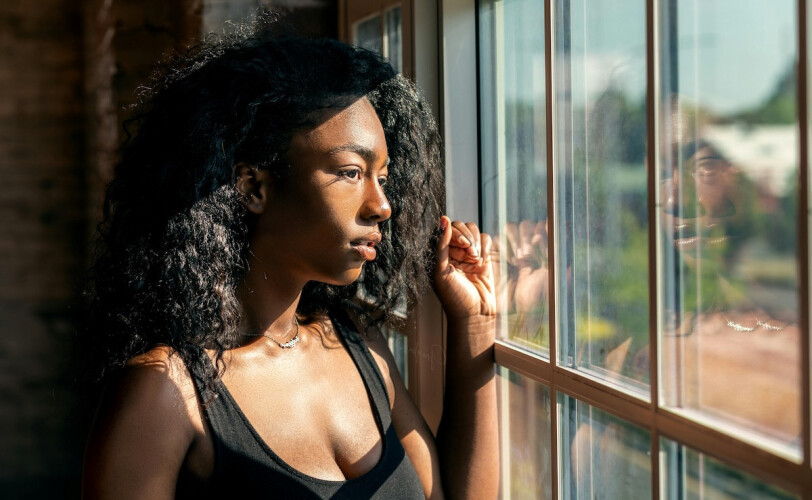
You can be surrounded by people who care about you and still feel deeply alone. To others, you may “look fine”, smiling, engaging, and getting on with life. What they do not see is the effort it takes to maintain that image, or the invisible toll it carries.
They do not see the moments when your energy disappears without warning, when your mental health dips, or when a flare-up forces you to cancel plans at the last minute. They do not see the guilt, the frustration, or the tears. And there is often grief too, grief for the version of yourself that existed before your symptoms became louder.
It is worth pausing to ask yourself: are you giving yourself the same level of care that you give to everything and everyone else?
Alongside this comes frustration, the endless referrals, waiting lists, and the feeling of being stuck while searching for answers. At times, you may even begin to question your own experience when it is dismissed by others. Women’s health conditions, in particular, are far more common than many realise, but they are frequently minimised or misunderstood. When support is inconsistent, everything can feel heavier. Relationships may become more difficult, and you may find yourself withdrawing because explaining your reality feels exhausting.
Over time, you adapt. You teach people to accept “I’m fine” at face value, and gradually, isolation can begin to feel like the safer option.
When life forces you to live differently
For me, reinvention was not a choice; it was a necessity.
My journey began in 2009 when I was diagnosed with Multiple Sclerosis. I was young, free-spirited, and full of life, and suddenly everything changed. The diagnosis brought with it a deep sense of grief, the loss of the life I thought I would have and the emotional weight of navigating something so unpredictable.
In search of understanding, I attended events focused on chronic conditions. While they were informative, they could also feel overwhelming. Being surrounded by so much information while still processing your own experience can be difficult. It raises an important question: where in your life are you being asked to do things differently?
Years later, in 2016, my health took another unexpected turn. I underwent emergency surgery for ovarian cysts I did not know I had, one of which ruptured while I was out jogging. This led to further diagnoses, including fibroids and endometriosis.
My body changed rapidly. Within weeks, I went from a size 10 to a size 16. I had to stop exercising, something that had always been my outlet, and began to fear it instead. Each diagnosis required me to adapt again, mentally, emotionally, and physically.
At the time, none of it made sense. But life does not always offer clear explanations. What it does ask of us is to trust ourselves enough to move through the uncertainty and, eventually, grow through it. And importantly, to recognise that we do not have to do that alone.
The turning point: choosing yourself
There came a point when my medical anxiety became overwhelming. I realised that if I wanted to move forward, I needed to focus on what I could control, my healing.
That realisation led to difficult decisions. I left my job after four years, despite having reasonable adjustments in place. I was exhausted, physically, mentally, and emotionally, from constantly giving to everything and everyone else. My weekends became recovery time, but even that was not enough.
With so much happening, I began to question myself in ways I never had before. I knew I had the skills and experience to progress in my career, yet I held myself back. I convinced myself that my health would not allow it, focusing instead on what might go wrong, the sick days, the pressure, the expectations.
So I stayed where I felt safe, continuing in roles I had outgrown and choosing stability over progression. I wanted to avoid judgment, assumptions, and the need to explain my situation.
Eventually, I had to ask myself a difficult but necessary question: what feels like it needs to change in your life right now, but you have been avoiding?
Deep down, I knew I was capable of more. I had the qualifications, the experience, and the support. What I needed was belief and the courage to act on it. My desire for change had to become stronger than my fear.
I gave myself permission to step back and create space to reflect and heal. I began to accept my reality while also acknowledging how far I had come. Healing, I learned, is not a straight line.
In that period of stillness, I started to reconnect with myself. I asked difficult questions, reflected more deeply on my life, and began journaling my thoughts. I reintroduced gentle movement, such as walking and dancing, strengthened supportive relationships, and let go of those that drained my energy. I practised mindfulness, becoming more aware of my surroundings and my internal state.
Although I initially resisted it, I also accepted counselling, which played a significant role in my healing. Later, I sought coaching, which helped me move forward with greater clarity and intention.
As my well-being began to improve, I started volunteering with the MS Society and created a platform to raise awareness of invisible disabilities. Through this work, I continued to learn about others and about myself.
I am now a certified Coach, helping and empowering others to create meaningful change in their lives.
It is worth asking yourself: have you ever limited your own potential, not because you lacked ability, but because you were uncertain whether your circumstances would allow you to succeed?
Counselling vs coaching: understanding your needs
Early in my own health journey, I did not fully understand the difference between counselling and coaching, yet both became important at different stages.
Counselling focuses on healing the past. It provides space to process emotions, trauma, and lived experiences. Coaching, on the other hand, is future-focused. It supports you in setting goals, building confidence, and creating a life that aligns with your current reality.
Neither is better than the other; they simply serve different purposes. The most important thing is finding what is right for you. If you were to put your needs first, even briefly, what might that look like?
What reinventing yourself really means
Reinventing yourself does not mean that challenges disappear, nor is it a linear process.
To me, it means becoming better equipped to navigate life as it is now, not as it once was, or how you expected it to be. It can involve letting go of what no longer serves you, rebuilding your identity in a way that reflects your current reality, learning to listen to your body rather than push against it, and creating a life that genuinely supports your wellbeing.
It also means accepting that you are allowed to change. At the same time, your version of reinvention may look entirely different, and that is equally valid. The process is deeply personal.
So consider this: what would it look like for you to start showing up for yourself in a way that truly supports your well-being? That awareness is often where reinvention begins.
There is no pressure to answer these questions immediately. If you choose to reflect on them, do so with intention. Take your time, journal your thoughts, and allow yourself space to process honestly and gently.
A gentle reminder
You are not alone in this world. Your experiences are valid, even when they are not always visible or understood by others. Your life is not over; it is unfolding, evolving, and continuing in new ways. Reinventing yourself is not about becoming someone new. It is about learning how to live as you are now.
If something in this article has resonated with you, consider it an invitation to take the next step, whatever that may look like for you. You do not need to have all the answers. You simply need to be open to starting.
Find the right business or life coach for you
All coaches are verified professionals


