
Authentic self vs conditioning in relationships

We have all had that moment in a relationship where we become agitated and upset with our partners and snap at them unnecessarily. Then they ask, "Why do you do that?" And you simply retort, "It's who I am!"
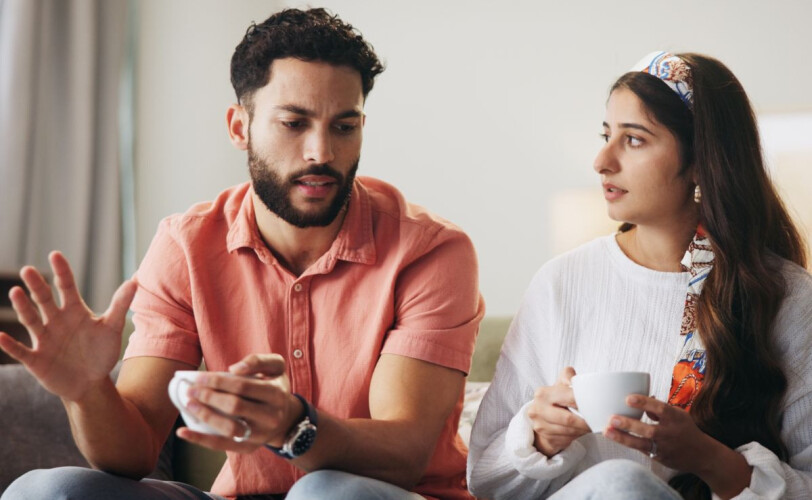
Is it? Or is it simply old wounds being touched, coming up to be healed and released? Your authentic self is actually beneath the wounding.
How conditioning shapes your reactions
We first have to understand that our inner voices are not us. They are simply accumulations of voices over a lifetime. The voices of our parents, caregivers, friends, and teachers. Loving and kind or judgmental and destructive or, sometimes, both.
If we step back and learn where these inner voices come from, we release the need to act upon them or, in this case, react from them. If you have an inner critic, always berating yourself, and your partner says something that triggers that, we assume that they are criticising us. When in fact, it's our past coming up to be noticed and released. They can get all mixed up like a washing machine, and we find it hard to decipher what is us and what is not.
Why relationships trigger old wounds
Closeness to another human being can bring up unhealed parts of ourselves. Intimacy can make us feel exposed, and it triggers our deepest vulnerabilities, past hurts and sensitivities. It's why arguments can happen in the present moment, when in fact, it's the past coming up, helping us to heal. And when both partners are triggered simultaneously, boy, are there fireworks!
Relationships are often two unhealed children coming together in intimacy to trigger each other into facing ourselves and our own healing. We cannot heal the other, but we can use the triggers as lessons and teachers to move beyond our past pain.
A lot of us think we have to carry around our past hurts, but when left to accumulate, it can become toxic, and anger can and will build up to the point of eruption, and we can end up hurting the very people we love and hold dear.
Learning to respond instead of react
But there is hope. We can simply learn to put those triggers down and not react from them. We will still feel triggers, but they will have less and less power and impact, the more you are able to let them go. We can also call this non-attachment. You can still feel the trigger inside, but instead of the knee-jerk reaction, you acknowledge within yourself that it's from the past and it's not happening in the present. It's merely coming up to be felt and moved through and let go of.
Bringing awareness of our pain to loved ones
We can include our loved ones in the process by simply explaining that you feel triggered. Rather than making them the source of your anger and upset, you can explain it’s old patterns, wounds or feelings coming up. You don’t have to explain more if you don’t want to. You can ask for space if needed. That way, it's coming from a place of inclusion, kindness and love, rather than destruction.
It's also about learning you are safe in the present moment, and the child who felt helpless is now the adult who has choices and freedom the child never had. It’s nourishing that child within who didn't feel safe in the past, and reassuring them that it's now OK to let go of the fortress we built to keep us safe. It served its purpose at that time and is no longer needed in adulthood.
Taking emotional responsibility in relationships
A lot of us also never learned emotional regulation as children, but it is never too late to learn, if you have the awareness and willingness.
We always think relationships are about the other person giving us what we need, but what if I tell you it’s about you looking after your own needs? It's about two people who know how to fill their own cup first, who don’t feel 'lack' or 'emptiness' within, begging for it to be filled by another person. But, instead, two people who can love from a place of wholeness.
"I will take care of me for you, if you will take care of you for me" – Jim Rohn
This quote sums it up perfectly. Healthy relationships cannot be about expecting the other person to fill a hole within, but if we can take the view that personal development is the greatest gift, not only to ourselves, but to our relationship, it shifts the focus from codependent care-taking to self-responsibility. Being your best self is the best way to support your partner. If we are able and willing to live in this way, the results would be boundless.
How coaching can help cultivate healthier relationships
Coaching can help you to understand where those inner voices can come from and how to release them in a way that isn’t toxic to your life and relationships. You can develop a way to live from wholeness and not need or lack or form the expectation of another person completing you.
The same goes for those of us who feel the need to over-give or rescue. We can give that responsibility back to our partners, as they are capable of personal growth. It's not your responsibility to parent your partner. If both partners take personal responsibility for themselves, there would be no lack, and both would live in a place where love comes from a place of wholeness and not neediness. Then you would find that you live in harmonious love where love is not only flowing, but overflowing.

Find the right business or life coach for you
All coaches are verified professionals